

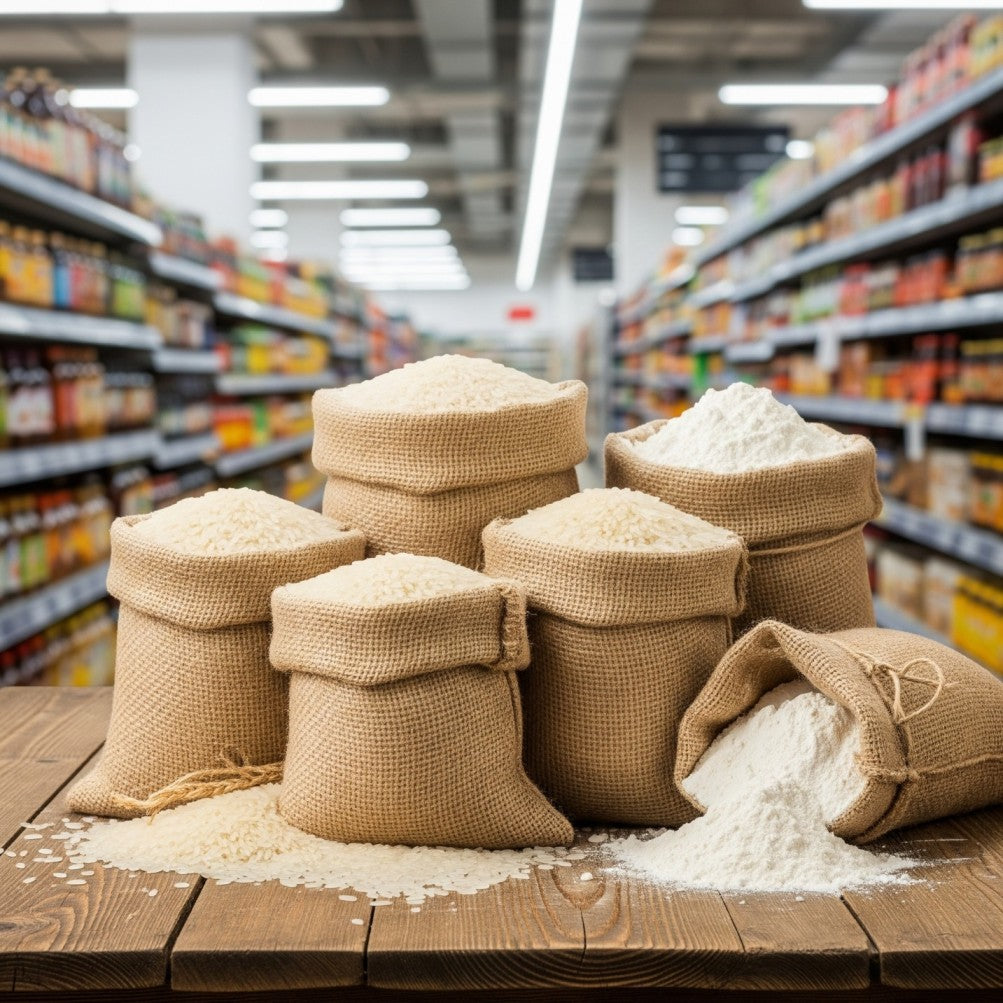




Walk into any store and you’ll find multiple types of atta, such as fine, medium, wholemeal, multigrain, all looking similar but performing very differently in your kitchen.
The right choice can be the difference between soft, perfectly puffed roti and dough that’s difficult to roll. This guide breaks down exactly what each type does, so you can choose with confidence.
What Is Atta?
Atta is a finely milled wholemeal flour, traditionally stone-ground, used to make chapatti, roti, paratha, and other South Asian flatbreads. Unlike standard plain (white) flour, atta retains the wheat's bran and germ, giving it a denser texture, higher fibre content, and the slightly nutty flavour associated with traditional flatbreads.
The two things that vary most between atta products are the grind (fine vs medium vs coarse) and the type of wheat used (brown/wholemeal vs a lighter blend) and both affect how your dough behaves and how your roti turns out. Getting familiar with these differences makes it much easier to pick confidently next time you're restocking, rather than defaulting to whatever's on the shelf at eye level.
Fine vs Medium vs Coarse Atta
Fine atta is milled to a smooth, soft texture, which makes it easier to knead into a pliable dough and roll thin. It's the most common choice for everyday roti and chapatti, especially for anyone who prefers a softer, more delicate flatbread. If you're new to making roti at home, fine atta is generally the most forgiving place to start, since the dough is easier to handle and less likely to tear while rolling.
Medium atta has a slightly coarser texture than fine atta, giving a bit more chew and a heartier bite to the finished roti. It's a good middle-ground choice if you want more texture without going fully coarse, and it's a popular everyday choice across many households for exactly that reason texture without too much extra effort in the kneading.
Coarse, chakki-style atta is stone-ground in the traditional method, giving it the most rustic texture and the strongest wheat flavour. Chakki grinding is a slower, traditional process that many people believe better preserves the flour's natural nutrients and flavour compared to faster industrial milling. Our stone-ground chakki atta for traditional roti and 100 percent whole wheat chakki atta are both good examples of this traditional grinding style, if you want to try the difference for yourself.
Brown (Wholemeal) vs Light Atta
Brown/wholemeal atta uses the full wheat grain, including the bran and germ, giving it the highest fibre content and the deepest, most traditional flavour.
This is the atta most associated with authentic, everyday roti in South Asian households, and it's usually the first choice for anyone who grew up eating roti made this way.
Our brown chapatti flour for traditional roti is a good example if you're after that classic, hearty flavour and want a large pack for regular use, while the stone-ground wholemeal atta for authentic roti combines the wholemeal profile with traditional stone grinding in one pack.
Light/medium-blend atta is milled to be slightly softer and lighter in both colour and texture, often preferred by those who want a gentler flavour or an easier dough to work with, particularly for beginners.
It's worth trying a smaller pack first if you're switching from brown atta, since the difference in taste and dough handling can be more noticeable than the label suggests.
Multigrain & Specialty Atta
Beyond standard wheat atta, there are a few specialty options worth knowing about, especially if you're cooking for a household with different dietary needs or just want more variety in your everyday bread:
- Multigrain atta blends wheat with other grains, such as millet, barley, or oats, for extra fibre and a more complex flavour. Our multigrain atta for added fibre and nutrition is a good starting point if you want to add more variety to your regular rotation without a big pack commitment.
- Gluten-free chapati flour is made from alternative grains for those avoiding gluten, and behaves differently when kneading, usually requiring a slightly different water ratio and a gentler touch when rolling. Our gluten free chapati flour alternative is worth trying if gluten-free flatbread has been hard to get right at home expect the dough to feel noticeably different to work with at first.
- Ragi (finger millet) flour is a naturally gluten-free flour with a distinctive earthy flavour, often used on its own or blended into rotis for added nutrition.
Getting the Dough Right
Whichever atta you choose, a few basics make a real difference to the final roti:
- Water temperature matters. Lukewarm water generally makes a softer, more pliable dough than cold water, particularly with coarser or wholemeal attas.
- Rest the dough. Letting the dough rest, covered, for 15–20 minutes after kneading allows the gluten to relax, making it noticeably easier to roll thin and evenly.
- Knead longer than you think you need to. A well-kneaded dough should feel smooth and slightly elastic, not sticky or crumbly. This is one of the biggest differences between an easy-to-roll dough and one that keeps tearing.
- Adjust water ratio by flour type. Coarser and wholemeal attas typically absorb more water than fine atta, so don't assume the same ratio will work across every type you try.
Atta Comparison at a Glance
|
Type |
Texture |
Flavour |
Best For |
|
Fine |
Smooth, soft |
Mild |
Everyday roti, easy rolling |
|
Medium |
Slightly coarse |
Heartier |
A bit more bite and texture |
|
Chakki-ground |
Rustic, coarse |
Strong, traditional |
Authentic, traditional-style roti |
|
Brown/Wholemeal |
Denser |
Deep, nutty |
Traditional everyday cooking, higher fibre |
|
Multigrain |
Varies |
Complex, nutty |
Added nutrition and variety |
|
Gluten-free |
Varies by grain |
Milder |
Gluten-free diets |
How to Choose the Right Pack Size
Atta is sold in a wide range of pack sizes, from 1kg up to 25kg. As a rough guide:
- 1–2kg good for trying a new brand or type, or smaller households
- 10kg the most common size for regular family cooking
- 20–25kg best value for large households or those who cook roti daily
Conclusion
There's no single "best" atta the right choice depends on the texture, flavour, and dietary needs you're cooking for. If you want soft, everyday roti with minimal effort, fine atta is the easiest place to start. If you grew up on the deeper, more traditional flavour of stone-ground wholemeal roti, a chakki-style brown atta will get you closer to that taste. And if you're cooking for a household with different preferences or dietary needs, keeping a multigrain or gluten-free option alongside your everyday atta means everyone's covered without much extra effort.
The good news is that none of these choices are permanent atta is inexpensive enough to try a smaller pack of something new before committing to a larger one, so don't be afraid to experiment until you find the type that suits your kitchen best.
Frequently Asked Questions
What's the difference between atta and plain flour?
Atta is a wholemeal flour that includes the wheat's bran and germ, giving it a denser texture and higher fibre content, while plain (white) flour has these removed, resulting in a lighter, smoother flour more suited to baking than flatbreads.
Which atta is best for soft roti?
Fine atta generally produces the softest roti, since its smooth texture makes for a more pliable dough that rolls thin easily.
Is chakki atta better than regular atta?
Chakki (stone-ground) atta is milled using a traditional, slower process that many people feel better preserves flavour and nutrients compared to faster industrial milling, though both are widely used and the difference comes down to personal preference.
Can I use chapatti flour for baking?
Atta can be used in some baking, but its denser texture and higher fibre content behave differently from plain flour, so recipes may need adjustment. It's best suited to flatbreads rather than a direct plain-flour substitute.
How should I store atta?
Keep atta in a cool, dry, airtight container to prevent moisture and pests, and use within the timeframe on the pack for the best flavour and freshness.
Shop Our Full Range of Atta & Chapatti Flour
From fine everyday atta to traditional chakki-ground and specialty multigrain blends, we stock a wide range to suit every kitchen. Browse our full flour & atta range and find the right one for your next batch of roti.
Prev post

Hair Oil vs Hair Tonic vs Shampoo: How to Build the Perfect Hair Care Routine
Updated on 14 August 2026
Next post

Quail Eggs, Duck Eggs & Hen Eggs: What's the Difference & Which Should You Buy?
Updated on 06 August 2026

